
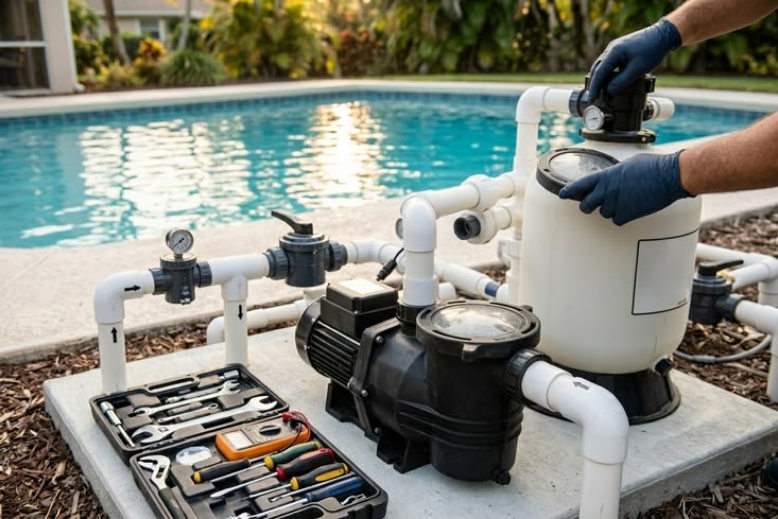
A swimming pool is made up of several components working together to provide clean, safe, and inviting water. While many homeowners focus on visible features such as the water itself or the pool finish, one piece of equipment quietly does the majority of the work behind the scenes: the pool pump.
Without a properly functioning pump, water cannot circulate effectively through the filtration system. This affects everything from water clarity and sanitation to the overall health of the pool equipment. Whether you own a small residential pool or manage a larger property with recreational facilities, understanding the importance of your pool circulation system can help you avoid expensive repairs and keep your pool performing at its best.
Regular pool pump maintenance and timely repairs are essential to protecting your investment and ensuring your swimming pool remains enjoyable throughout the year.
Understanding the Role of Pool Circulation
The pool pump is often described as the heart of a swimming pool because it keeps water moving continuously throughout the system.
Water is drawn from the pool through the skimmer and suction lines before entering the pump. From there, it is pushed through the filtration system, where dirt, debris and other contaminants are removed. The cleaned water is then returned to the pool through the return lines.
This constant circulation helps distribute sanitising chemicals evenly, prevents stagnant water from developing, and supports the efficient operation of every other piece of pool equipment.
Without proper circulation, even the highest-quality filtration system or sanitising equipment cannot perform effectively.
Signs Your Pool Pump Needs Attention
Like any mechanical component, pool pumps experience wear over time. Identifying problems early can prevent complete system failure and reduce repair costs.
Some of the most common warning signs include:
- Unusual grinding, rattling or humming noises
- Reduced water flow from the return jets
- Air bubbles entering the circulation system
- Difficulty priming the pump
- Water leaking around the pump housing
- Higher-than-normal electricity consumption
- Frequent circuit breaker trips
If you notice any of these symptoms, arranging professional servicing as soon as possible can prevent more extensive damage.
Why Good Circulation Matters
Many pool owners underestimate how important water movement is to overall pool health.
A properly functioning pool circulation system ensures that sanitising chemicals reach every area of the pool. It also helps remove microscopic particles that would otherwise remain suspended in the water.
Good circulation contributes to:
- Cleaner, clearer water
- Better chemical distribution
- Reduced algae growth
- Improved filtration efficiency
- Lower maintenance costs
- Longer equipment lifespan
When circulation slows or stops altogether, water quality deteriorates quickly. Cloudy water, unpleasant odours and algae growth often begin with poor circulation rather than chemical imbalance.
Common Pool Pump Problems
Pool pumps can experience a variety of mechanical and operational issues.
Worn Bearings
Bearings naturally wear over time and often produce a loud grinding or screeching sound. Ignoring this problem can eventually cause complete motor failure.
Blocked Impellers
Leaves, hair and other debris can become lodged inside the impeller, restricting water flow and reducing circulation efficiency.
Damaged Seals
Pump seals prevent water from leaking around the motor shaft. When seals wear out, leaks develop that can eventually damage the motor itself.
Electrical Faults
Loose wiring, faulty capacitors or motor issues may prevent the pump from starting or operating consistently.
Professional diagnosis helps identify the exact cause of the problem and prevents unnecessary replacement of otherwise functional components.
Repair or Replace?
One of the most common questions homeowners ask is whether a faulty pump should be repaired or replaced.
In many cases, repairs are sufficient if the issue is isolated to bearings, seals, impellers or electrical components.
However, if the motor has suffered extensive damage, the housing is cracked, or the pump is approaching the end of its expected lifespan, replacement may be the more cost-effective option.
A professional inspection allows technicians to assess the overall condition of the equipment and recommend the most practical solution.
Preventative Maintenance Makes a Difference
Routine maintenance is one of the simplest ways to avoid unexpected pump failures.
Professional servicing typically includes:
- Inspecting seals and gaskets
- Checking motor performance
- Cleaning pump baskets
- Inspecting impellers
- Verifying proper water flow
- Identifying early signs of wear
- Ensuring electrical components are functioning safely
These routine inspections often identify small issues before they become expensive repairs.
For homeowners who use their pools frequently, preventative maintenance provides peace of mind while helping extend equipment lifespan.
How Pool Pumps Affect Other Equipment
The pump works closely with every other part of the pool system.
Poor circulation places additional strain on filters, chlorination systems, heat pumps and cleaning equipment. This reduces efficiency across the entire pool system and can shorten the lifespan of expensive equipment.
For example, a clogged or underperforming pump forces filtration systems to work harder while reducing the effectiveness of ozone systems, salt chlorinators and heating units.
Maintaining the pump therefore protects the performance of every connected component.
Why Professional Servicing Is Worth It
Although some homeowners perform basic maintenance themselves, professional servicing provides a much more comprehensive assessment.
Experienced technicians have the equipment and expertise to:
- Diagnose mechanical faults accurately
- Test motor performance
- Identify hidden leaks
- Assess electrical safety
- Optimise system performance
- Recommend repairs before complete failure occurs
Professional servicing also ensures that repairs are carried out safely and according to manufacturer recommendations.
Rather than waiting for the pump to fail completely, routine inspections help maintain reliable operation throughout the swimming season.
Choosing the Right Professionals
Pool pumps represent one of the most valuable components of any swimming pool system.
Working with experienced professionals ensures that repairs are carried out correctly, replacement parts are suitable for the equipment, and the entire circulation system is inspected during servicing.
At A2Z Pool Services, experienced technicians inspect, repair and maintain pool pumps as part of a complete swimming pool maintenance solution. Whether your pump requires a minor repair or a full replacement, professional servicing helps restore efficient circulation and protects the long-term performance of your pool.
Conclusion
A healthy swimming pool starts with a healthy pump. As the heart of your pool circulation system, the pump keeps water moving, supports effective filtration and helps maintain clean, balanced water throughout the year.
Ignoring early warning signs can lead to costly repairs, poor water quality and unnecessary equipment damage. Routine pool pump maintenance helps prevent these issues while extending the lifespan of your entire pool system.
If your pump is making unusual noises, losing pressure or showing signs of wear, contact A2Z Pool Services for professional inspections, repairs and replacement solutions that keep your swimming pool operating at its best.
